Spotify · Song Radio
Humanizing The Algorithm
While Spotify's Song Radio relies on behavioral data for recommendations (like searching, listening, skipping, and saving), it does not take into account short-term changes in user behavior. As a result, it fails to give recommendations that match the evolving needs of users. Adding a tool that captures real-time preferences could generate better results and lead to greater satisfaction with the app.
Problem
- Listeners were unhappy with Song Radio recommendations.
- Song Radio does not anticipate changes in taste, mood, or interest.
Solution
Introducing filters would allow users to describe their needs explicitly, increasing the likelihood of positive outcomes.
Outcome
New and existing users struggled to understand the new interface, resulting in poor usability.
Section 1: ProblemWhat was the issue at hand?
I discovered that Spotify listeners were not fully satisfied with Song Radio recommendations.
I conducted a survey to understand how listeners felt about Song Radio recommendations.
44% of recommendations were disliked by listeners, and 89% of listeners wanted more control over them.
Listeners enjoyed 90% of recommendations similar to their taste, but only 22% of those that weren't.
Section 2: InsightsWhat did the research show?
Spotify's recommendation system couldn't predict how moods, tastes, and situations change in life, missing a key factor in the listening experience. Allowing listeners to share what they want in the moment could fill that gap. Together with behavioral data, live feedback would give Song Radio a fuller picture of user needs and make recommendations far more enjoyable.
Section 3: SolutionHow was this addressed?
I introduced filters into the Song Radio system in order to receive real-time data about listener preferences and accommodate their needs. The idea was that listeners had to follow four steps:
Search
Find a song to start from
Select
Choose a sound type
Submit
Pick song characteristics
Listen
Enjoy the tailored playlist
How adventurous the mix should be
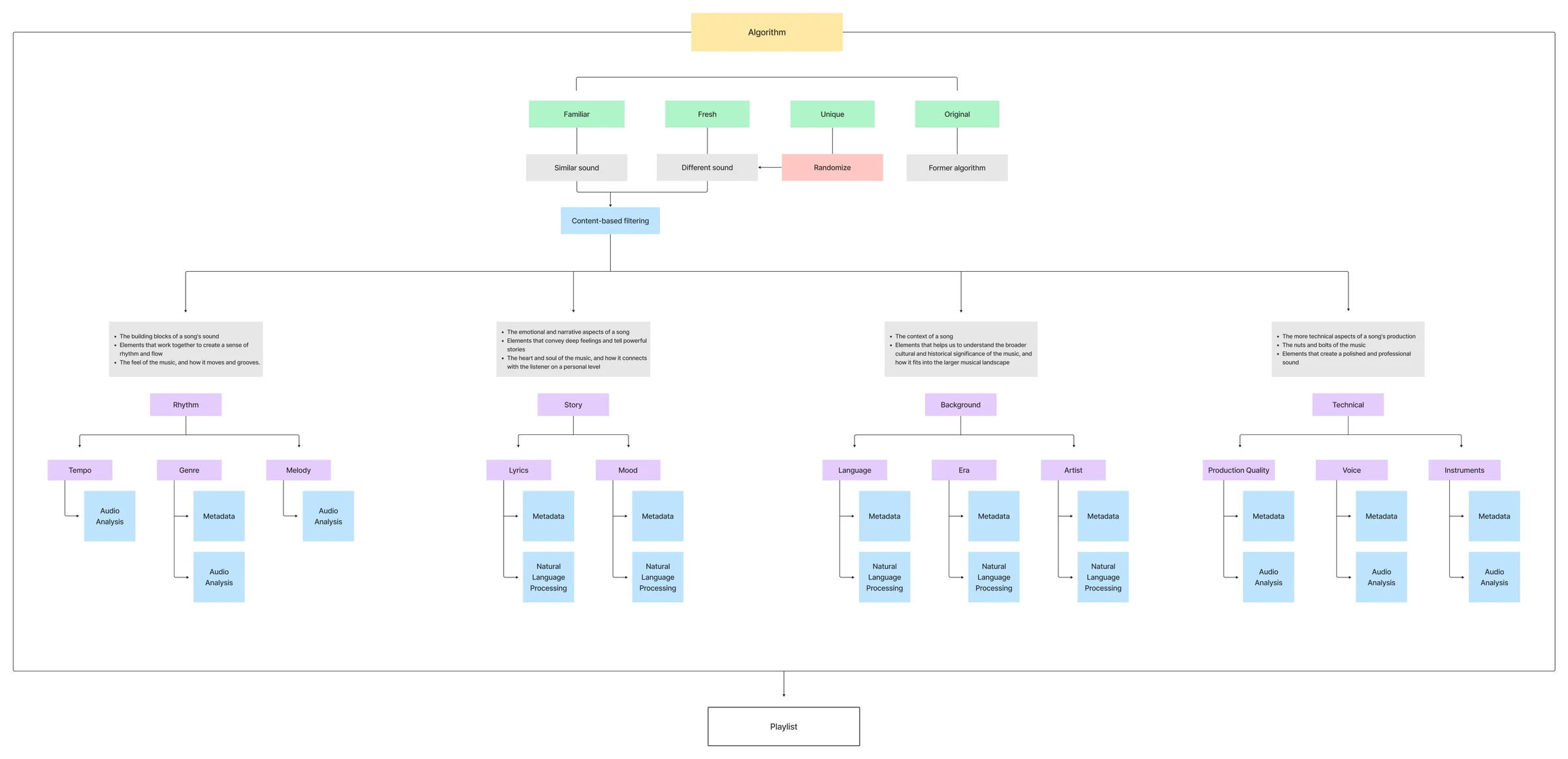
- Familiar
- Unique
- Original
- Fresh
Which qualities of the song matter most
- Story
- Rhythm
- Background
- Technical
Section 4: ApproachWhat was the plan of action?
Filters only work if both the front and back end support them. So, I worked in three phases to make sure every layer was ready.
- FrameworkSet up the logic
- DesignBuild user interface
- ResearchTest prototypes
Section 5: ProcessHow was this accomplished?
Framework
Before designing anything, I defined how filters would work behind the scenes.
How I set up the navigation and algorithm
I used card sorting to create filter labels that are easy to recognize.
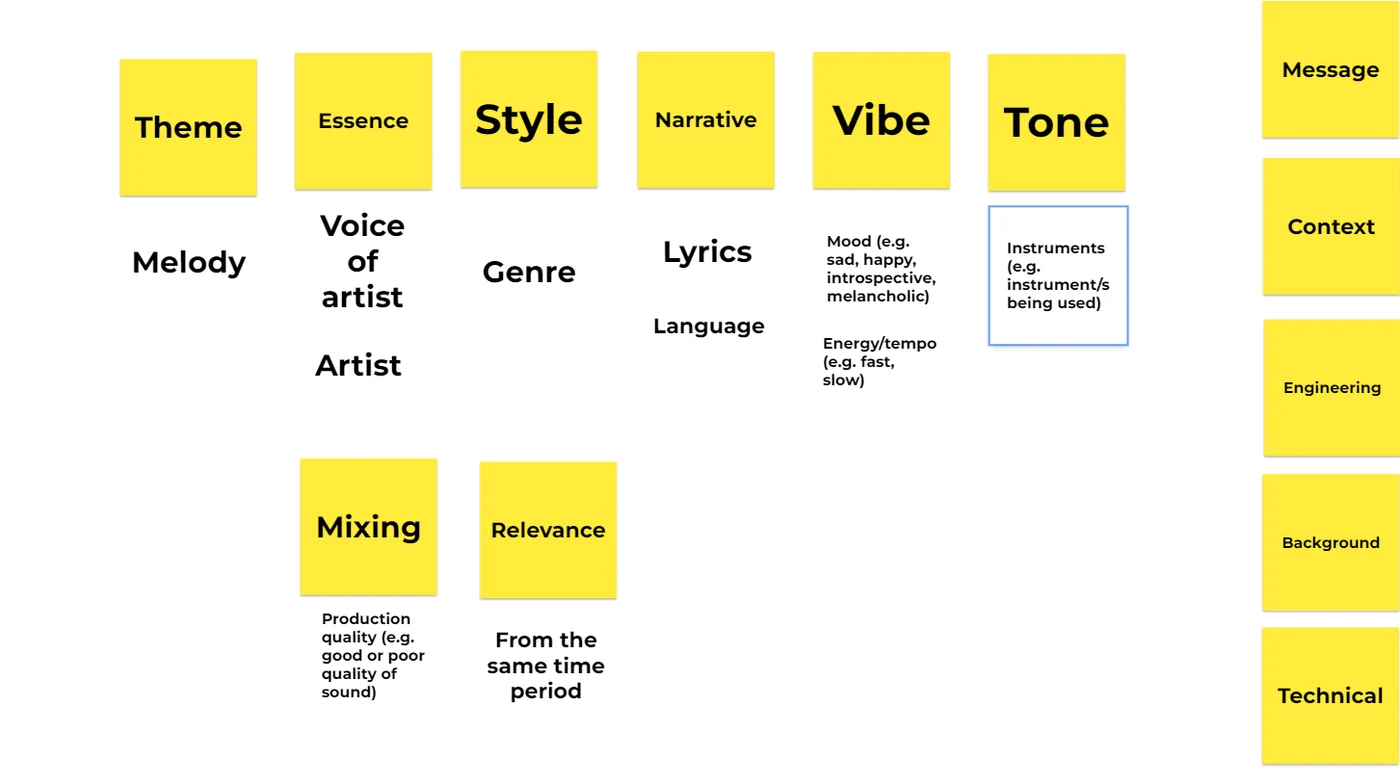
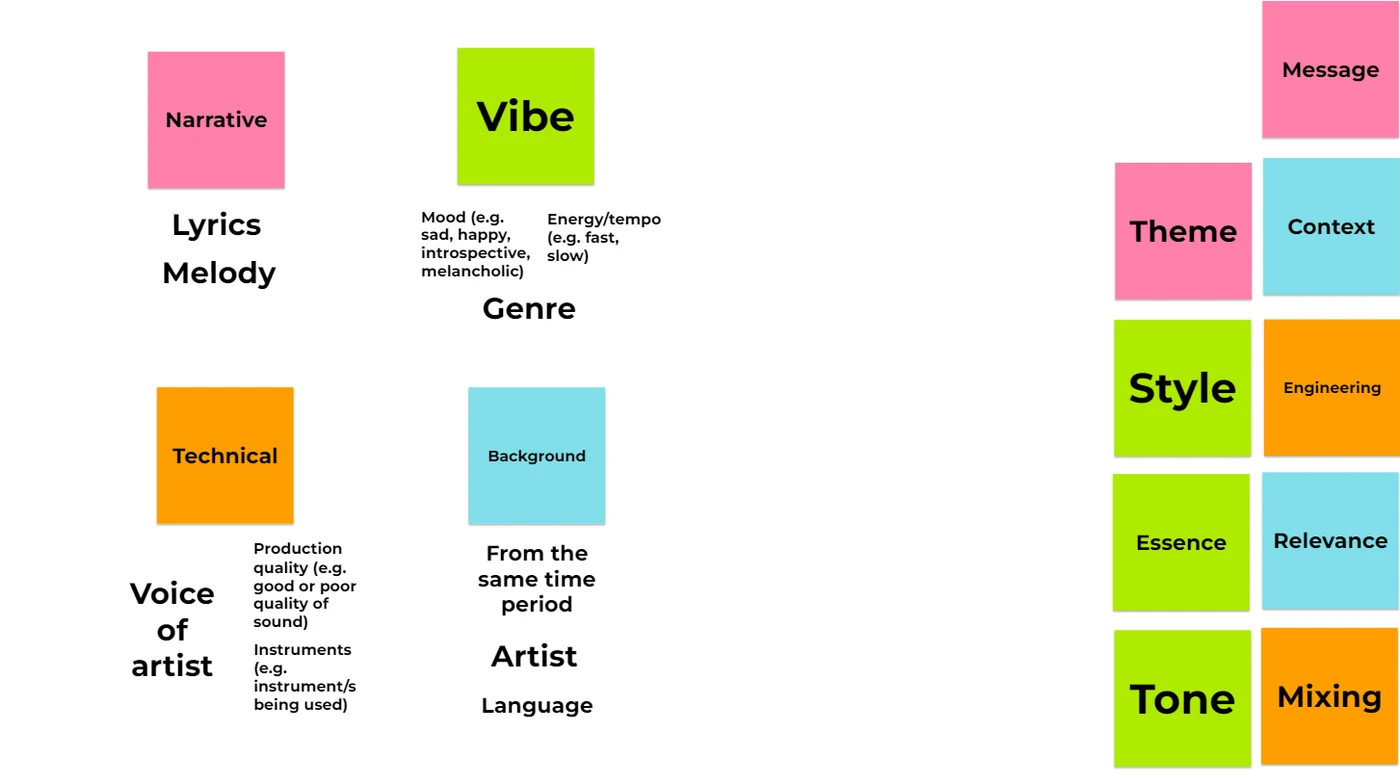
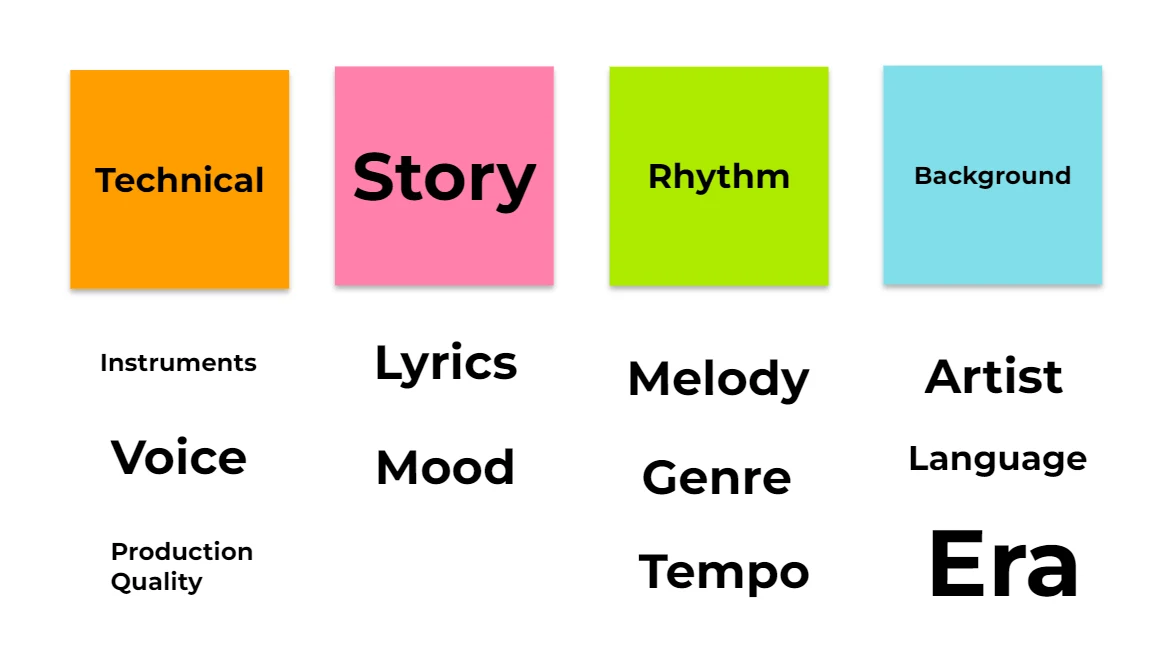
I built a decision map to show how each filter affects the quality of recommendations.
Design
With the navigation and algorithm in place, I designed how listeners would see and use filters.
How I designed the interface
I set three ground rules: Song Radio must (1) be easy to find, (2) be easy to understand, and (3) resonate with all users.
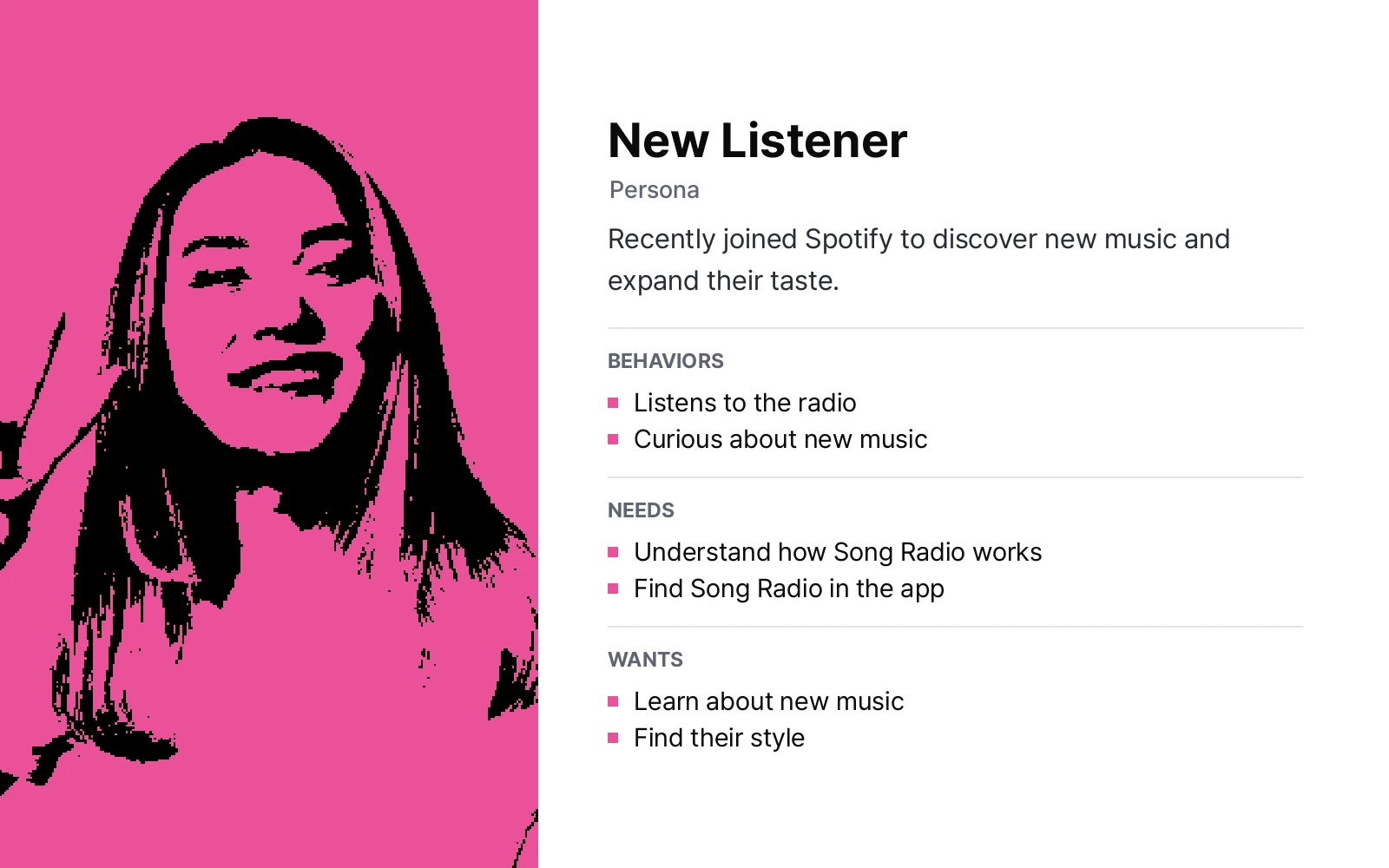
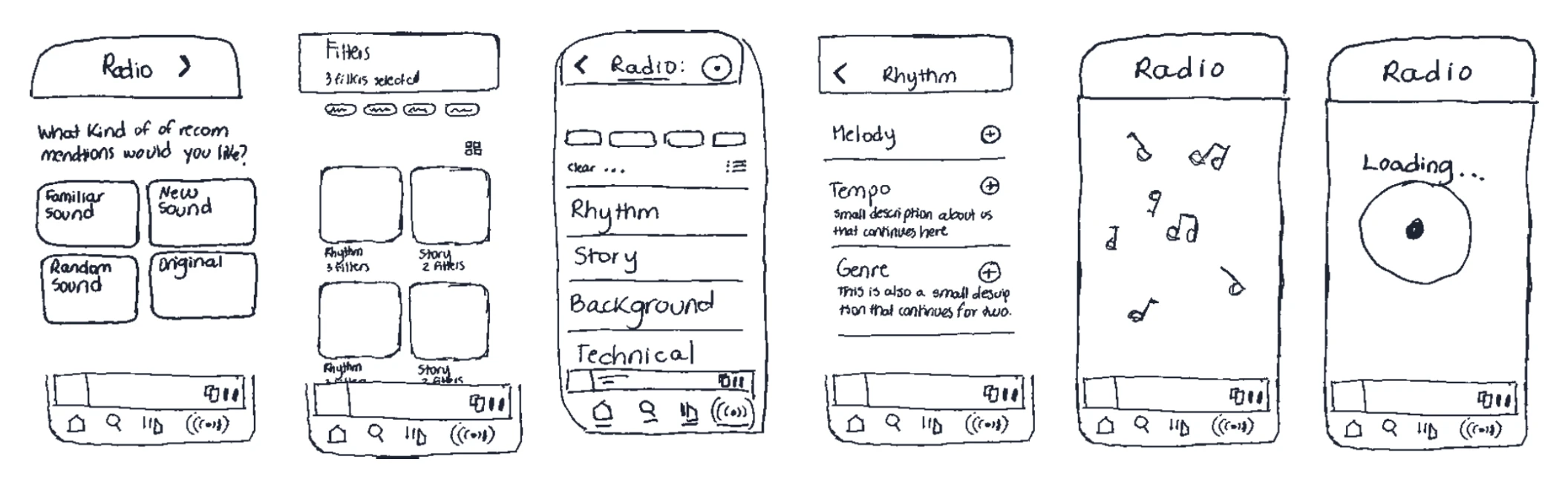
I developed low and mid fidelity wireframes, staying true to Spotify's identity.
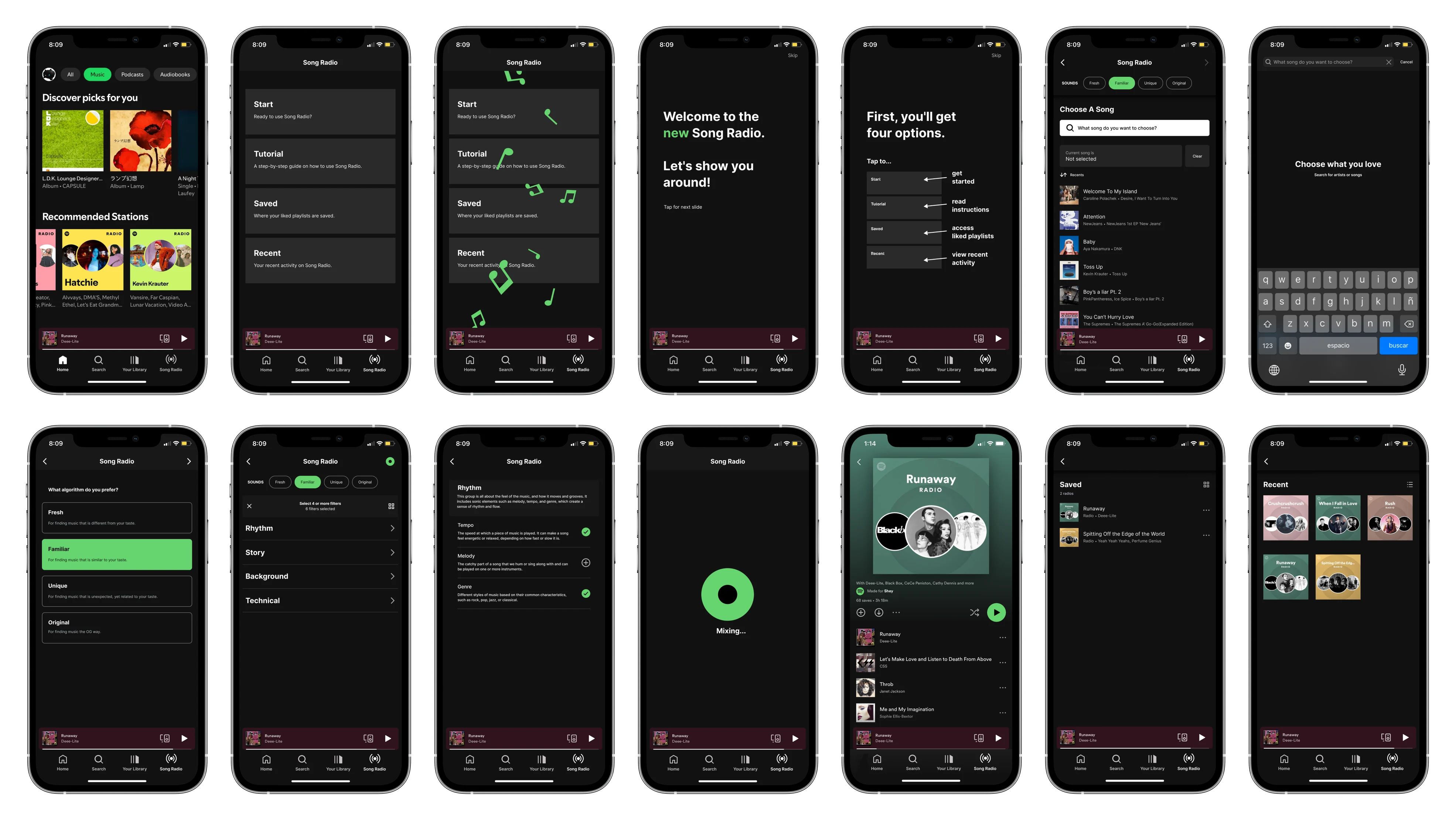
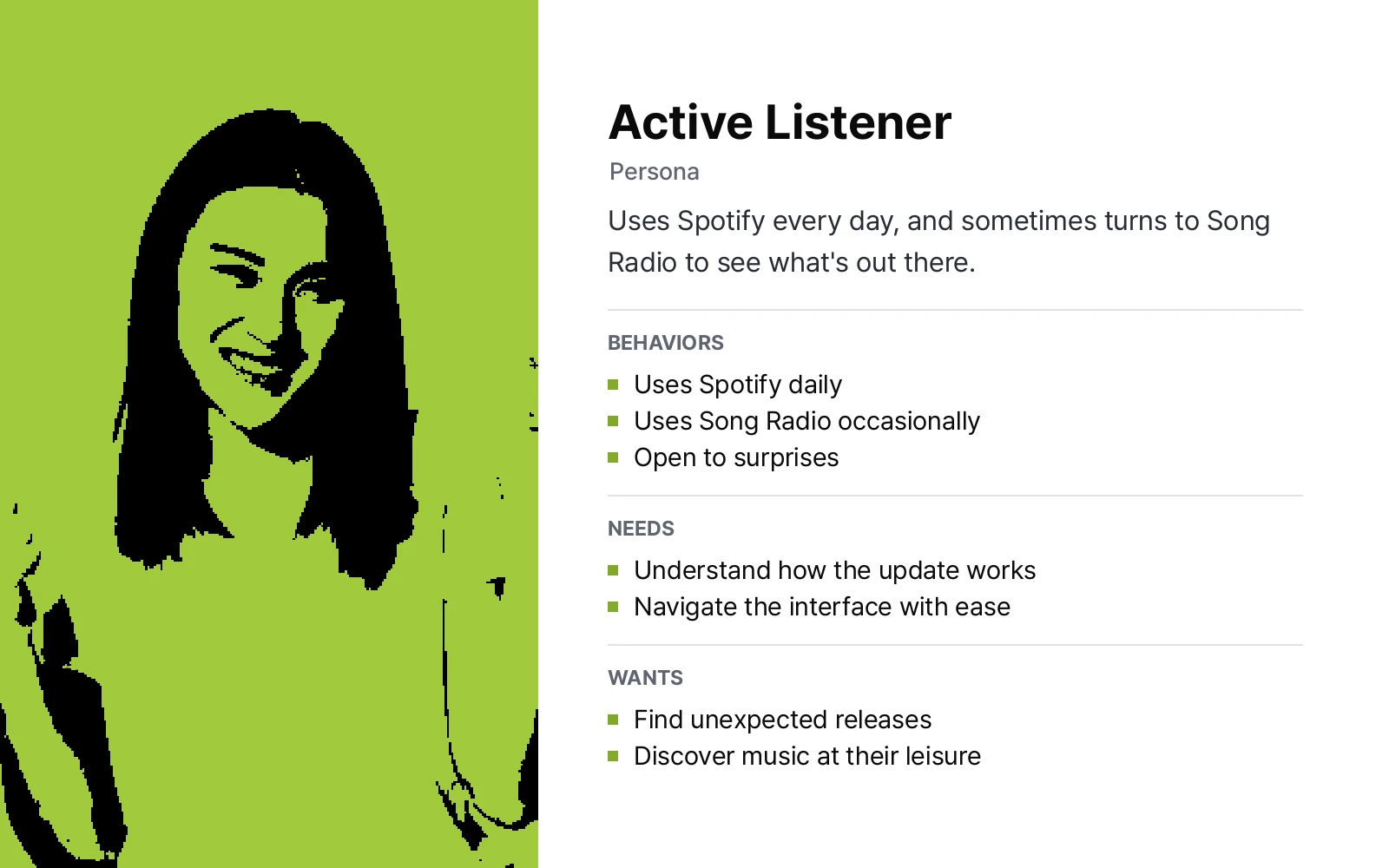
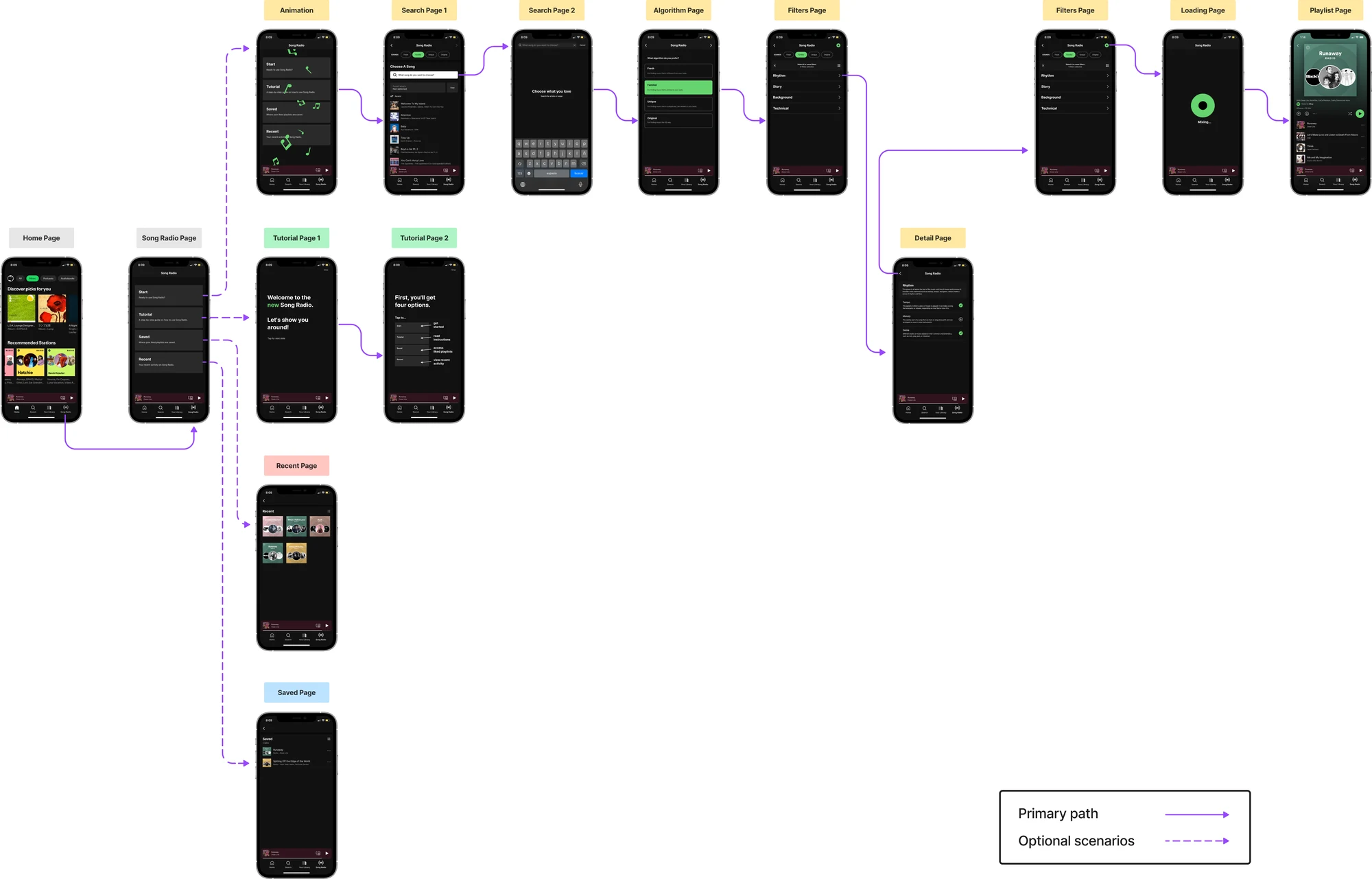
I mapped the process to complete onboarding, use filters, view saved content, and access listening history.
Research
To see if the interface worked, I observed how listeners applied filters.
How I tested the prototype
I built a static prototype covering every screen in the task flow.
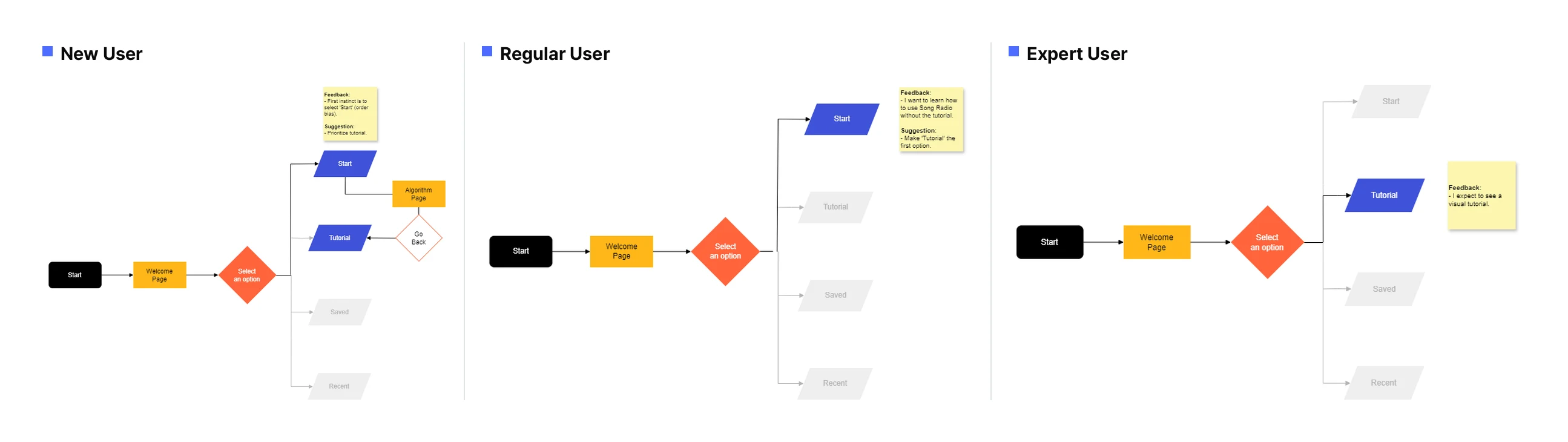
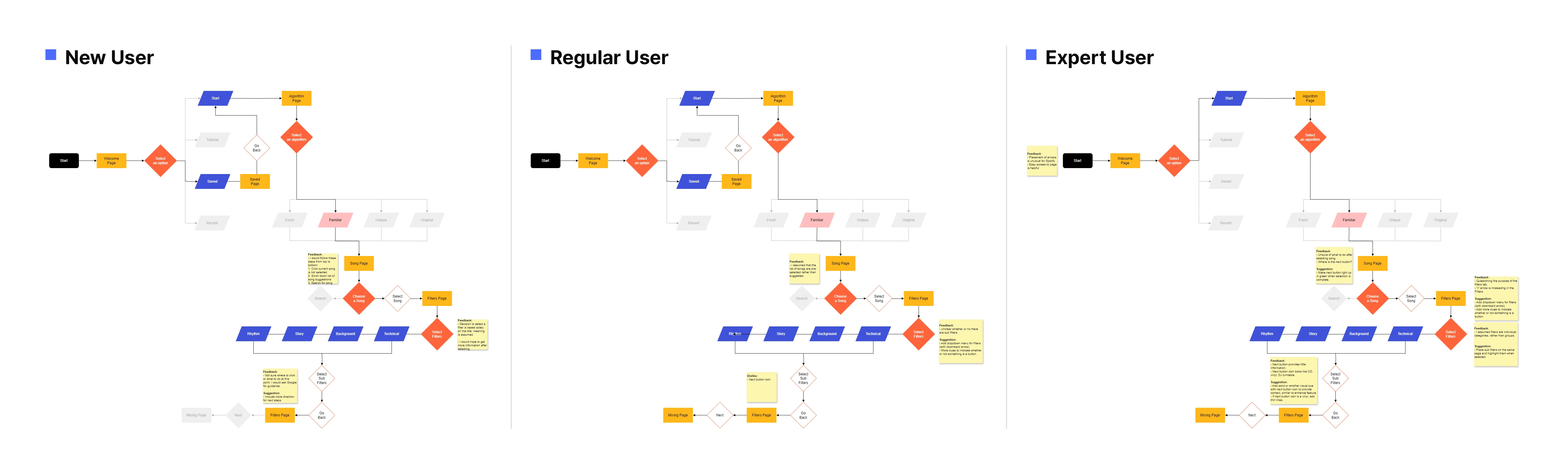
I tested the design with new, regular, and expert users to see how it worked across experience levels.


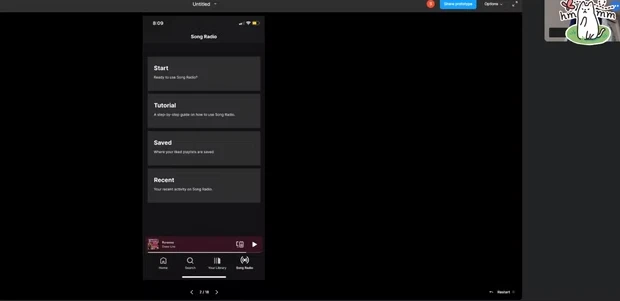
Participants completed four tasks remotely while I recorded their actions.
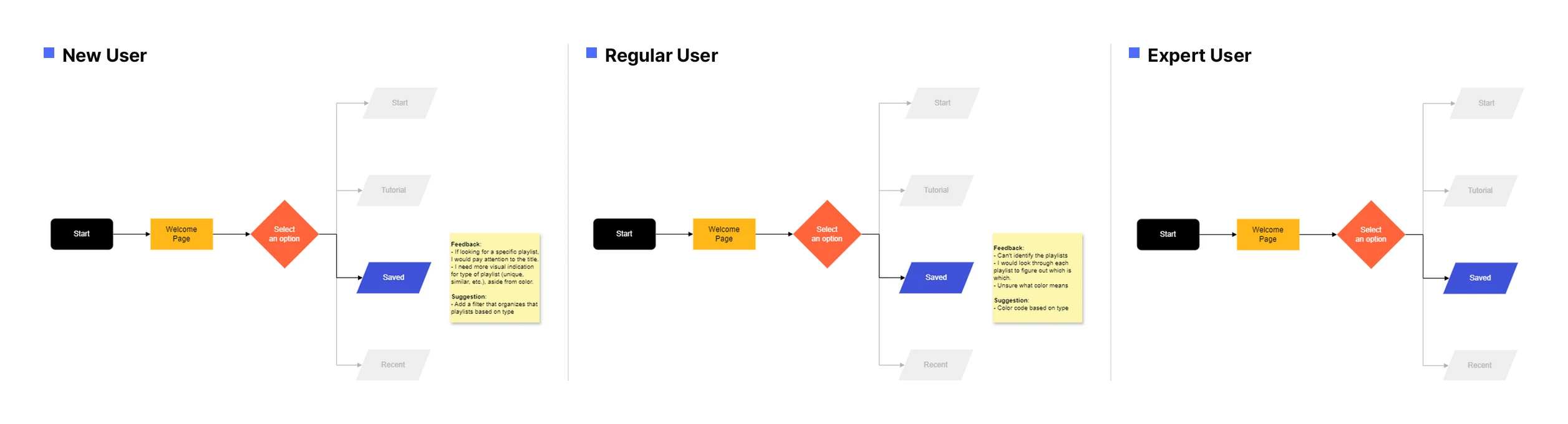
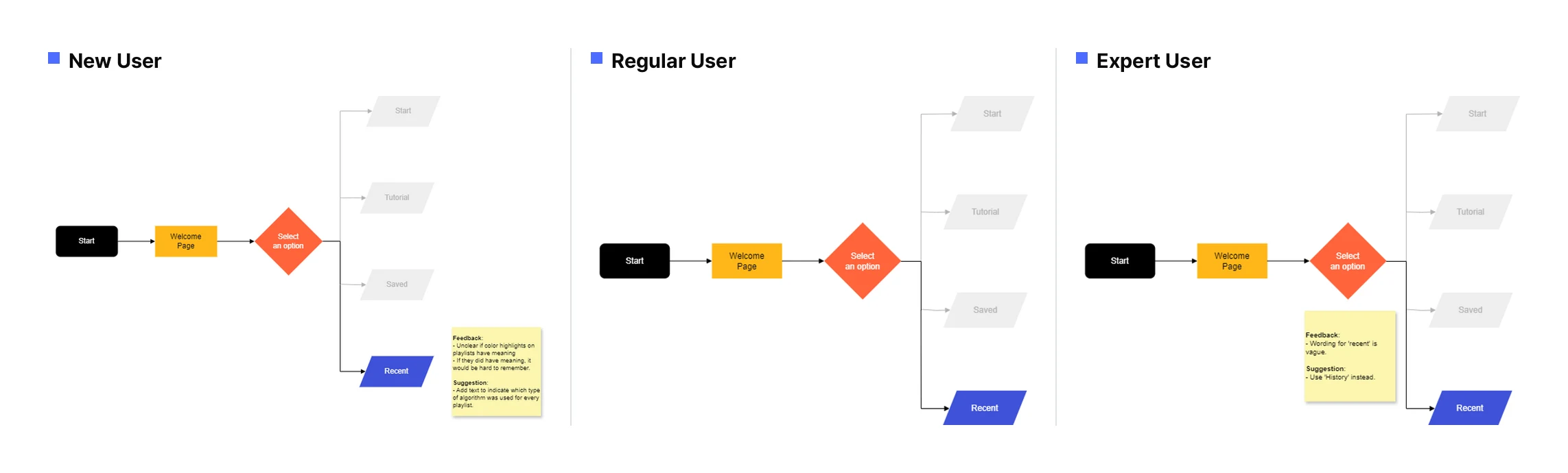
Analysis
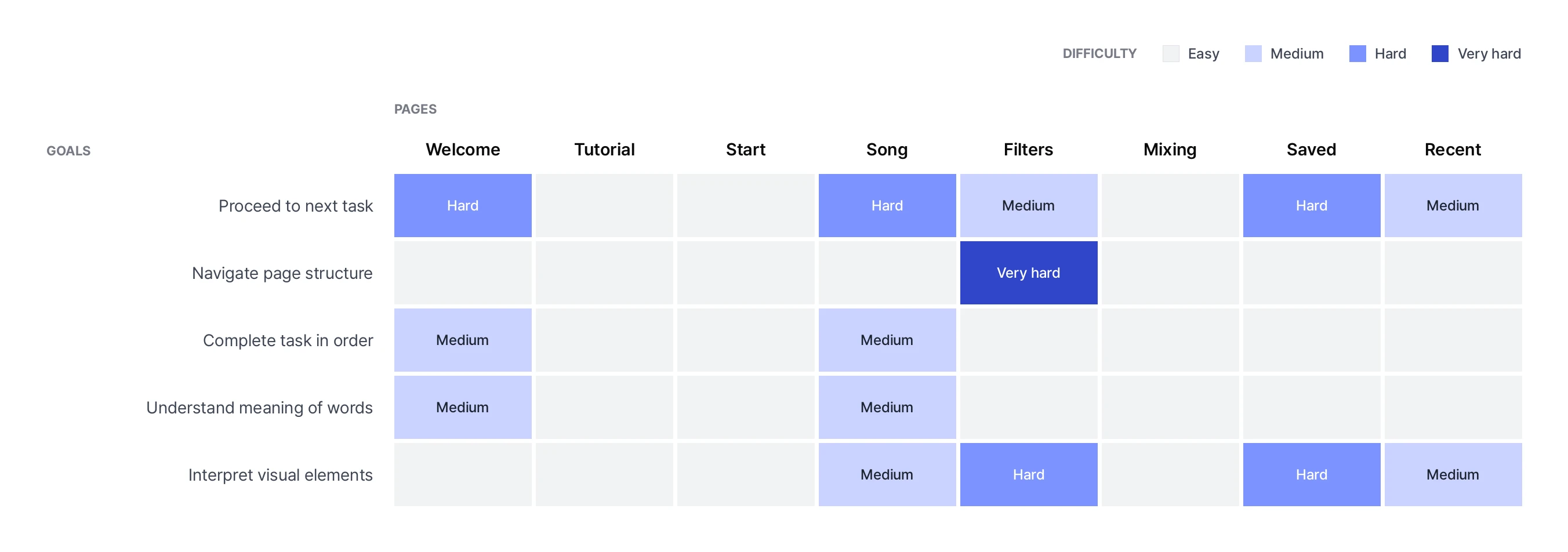
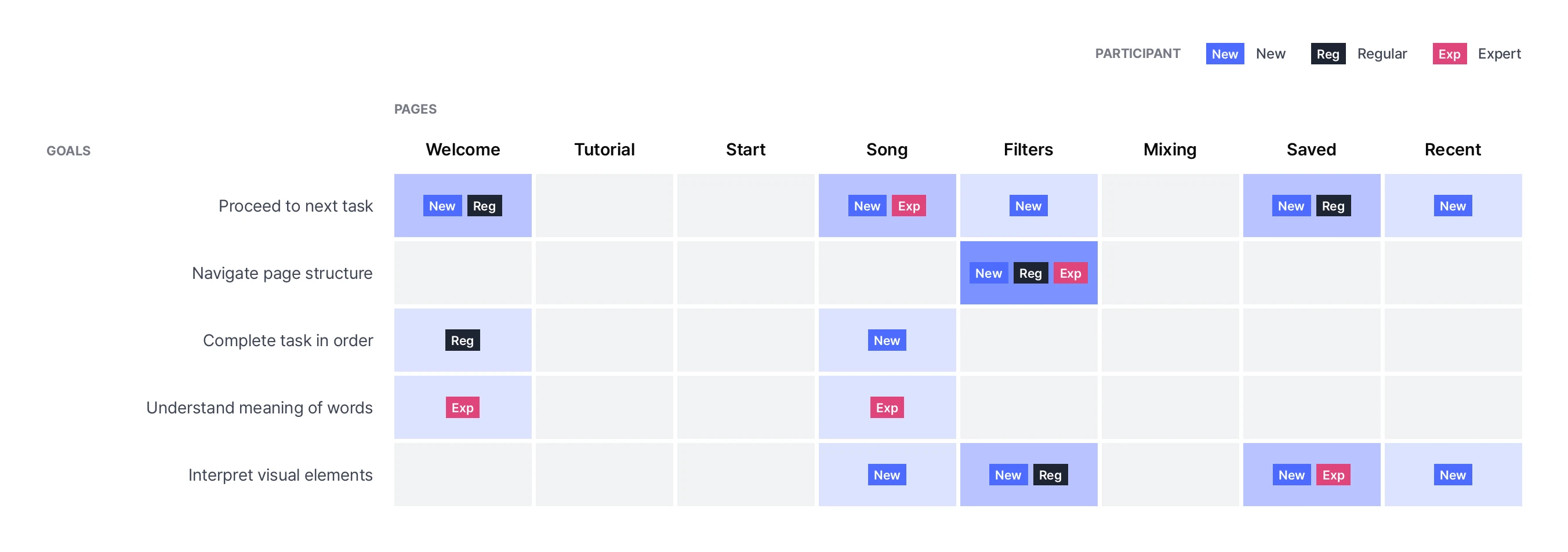
To make sense of the data, I created charts to map user pain points.
How I analyzed the data
I sorted every goal and rated its difficulty.
Section 6: ResultsWhat was the outcome?
There was a big learning curve for new and existing users.
- 35% of page interactions caused issues.
- New signs, symbols, and buttons were hard to interpret.
- Participants repeatedly got stuck while filtering, unsure what to do next.
- Navigation and ambiguous design caused the most issues.
New users struggled with the interface the most.
- 50%+ of issues involved new users.
The filters page was really confusing.
- 29% of issues came from the filters page, where all users struggled.
Section 7: TakeawaysWhat was the lesson?
Build on the product's existing patterns. Spotify's visual language is instantly recognized, so new features should feel like a part of it.
Onboarding matters as much as the feature. Tooltips, tutorials, and help buttons would make filters approachable for new listeners.